Many circumstances might cause you to look into replacing a missing tooth, regardless of your age. Those who do not take care of their teeth and gums are at particularly high risk for tooth loss, as both gum disease and decay can damage gums, tooth roots, and teeth. Cavities can lead to significant damage, as well as chronic diseases like diabetes and arthritis. Even with the best of care, there are bound to be accidents. You may trip and fall, causing trauma and breaking off a tooth.
Dental implants are commonly recommended solutions for replacing a missing tooth or teeth, given that they are considered a permanent fix and given the high success rates of the procedure.
What is a dental implant?
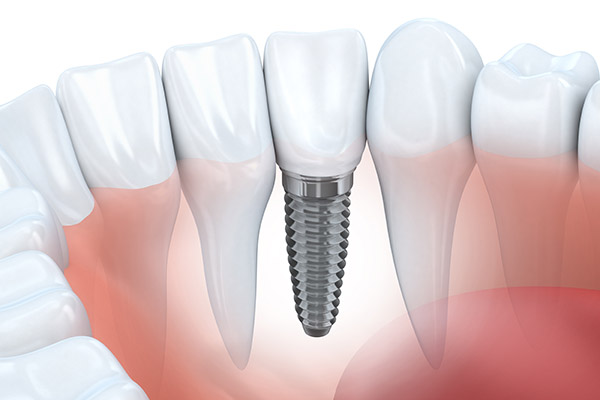
The dental implant has been around for decades and continues to grow in popularity. The implant itself is a replacement for the tooth root, the part of a tooth that anchors it to your jawbone. The implant itself is a small metal post that is supposed to be placed in your jawbone. Like other types of implants, dental implants are made of metal. Titanium is the most used alloy in implants. For most people, it is compatible with bone growth. In other words, your bone should grow around and “accept” the titanium root replacement.
Pre-operative/prep work before the dental implant procedure
Like most planned surgical procedures, there will be a time for consulting and planning. You will meet with your dentist, who will review your records and imaging. Also, you will likely need medical clearance.
Any surgical procedure requires medical clearance. This means that you must be healthy enough to undergo surgery. Any presence of infection may cause delays or even preclude you from going through with the procedure. The presence of things like gum disease and decay may have caused infection in your gums or teeth.
The dental implant procedure and post-op care
The implant procedure is a well-established, commonly performed procedure. It is an outpatient procedure, meaning it is completed in one day and does not require admission. If any part of the tooth's crown is left in the operative area, it will need to be extracted. Every patient is different, meaning some patients may require bone grafts. Once there is adequate bone for placement, the dentist will place the metal implant in the jawbone.
The postoperative healing process for dental implants is somewhat lengthy. It requires that you exercise great dental hygiene and avoid certain foods to allow for uninterrupted healing. Over a few months, in a process called “osseointegration,” the jawbone should grow around and solidify with your implant.
Eventually, if the implant is accepted, you will receive a tooth crown attached to your implant. To see if you are a candidate for this option for replacing a missing tooth; contact your dentist.
Recent Posts
There are several options for replacing missing teeth so that you can preserve your jawbone and keep your face looking its best. You can discuss with your dentist what option might be best for you based on the type of work required to replace the tooth or teeth and other factors such as how long…
If you are missing teeth, you should visit a dentist to discuss your options for replacing missing teeth. Read on to learn about available tooth-replacement options. Undergoing tooth replacement helps prevent the consequences of missing teeth, such as bone loss. Aside from the apparent cosmetic effect of tooth loss, there are many additional less conspicuous…
Partial dentures are one of the most cost-friendly and effective options for replacing missing teeth. They can either be removable or fixed dentures. This is a guide on what partial dentures are, their benefits, and how to care for them.Partial dentures, commonly known as partials, are artificial replacement teeth that replace a patient's missing teeth.…